Spells, Streets, and Solidarity: The Young Witches Turning Magic Into a Movement
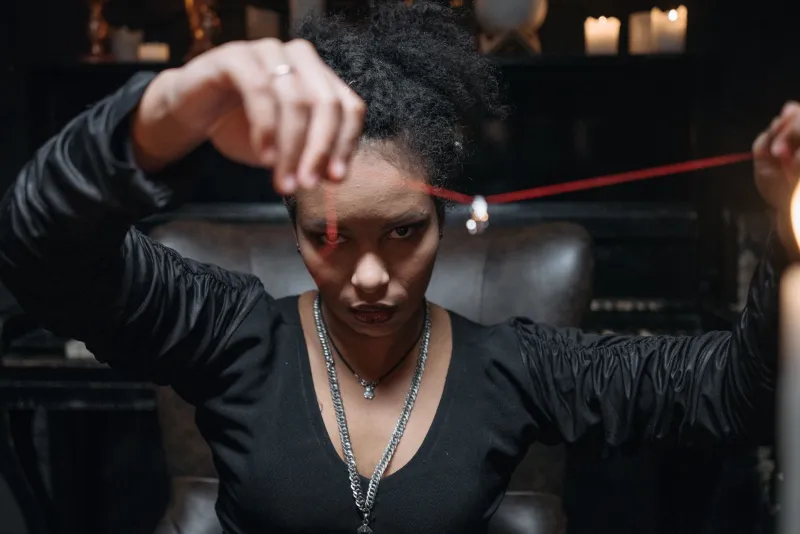
There's a candle burning on a makeshift altar in a studio apartment in Atlanta. Next to it: a printed-out photo of a state senator who just voted to gut Medicaid, a handwritten list of names — people in the community who need rent help this month — and a dog-eared copy of Witches, Midwives, and Nurses by Barbara Ehrenreich. The person tending this altar isn't performing a ritual for aesthetic clout. They're organizing.
Witchcraft has always been political. That's not a reframe — that's the history. The women who were accused of witchcraft in colonial America weren't random targets. They were healers, herbalists, midwives, and people who lived outside the lines patriarchal society tried to draw around them. The persecution was never really about magic. It was about control. And now, a new generation of practitioners is picking up that thread and weaving it into something that looks a lot like activism.
Not Your Aesthetic Witch
Let's be clear about something: this isn't the #WitchTok trend of moon water and manifestation journals (though there's nothing wrong with that either). The practitioners reshaping occult culture as a tool for resistance are drawing from deeper wells — folk magic traditions, indigenous plant knowledge, African diasporic spiritual practices, and the radical feminist spirituality movements of the 1970s. They're doing the reading. They're doing the work.
Social media has made it easier to find each other, sure. But the digital coven isn't just a vibe — it's a coordination infrastructure. Discord servers, Telegram groups, and private Instagram accounts are being used to organize mutual aid spells, share resources for people seeking reproductive healthcare across state lines, and plan collective rituals timed to legislative votes. When Texas passed its abortion ban, practitioners across the country lit candles together on a shared livestream — not as a performance, but as an act of communal grief and defiance.
"Magic, at its core, is about intention and energy and the belief that your actions matter," says one practitioner who runs a queer-led coven in Chicago focused on environmental justice. "That's not different from organizing. It's just organizing that also honors the spiritual dimension of the fight."
Hexing as Metaphor (and More)
Okay, let's talk about the hex. Because it's the part that makes people uncomfortable, and discomfort is often where the most interesting conversations live.
In 2017, a loosely organized group of practitioners made national headlines when they announced a mass hex on then-President Trump. The response was predictable — mockery from the mainstream, moral panic from certain religious communities, and a whole lot of think pieces. What got lost in the noise was the actual point.
Hexing, in this context, was never really about supernatural punishment. It was a reclamation of power by people who felt utterly powerless. It was a public declaration: we refuse to accept your authority as inevitable. The ritual was the message. And for many participants, the act of gathering — even virtually — to name something as wrong, to direct collective will against it, was genuinely transformative. Not in a woo-woo way. In the way that any act of naming and refusing can change how you move through the world.
That said, plenty of practitioners push back on hexing as a tactic, pointing to ethical traditions within their craft that emphasize harm reduction and the principle that what you send out returns to you. The debate inside these communities is real and ongoing. Which is, honestly, more nuanced than a lot of political discourse happening elsewhere.
Spell-Casting for Mutual Aid
Here's where it gets tangible. Across the country, practitioners are building what they call "magical mutual aid" networks — blending practical community support with spiritual practice in ways that refuse to separate the two.
In New Orleans, a collective rooted in Hoodoo tradition runs a sliding-scale healing clinic one Saturday a month, offering everything from herbal consultations to grief rituals for people who've lost loved ones to gun violence. In the Pacific Northwest, a group of solarpunk witches has been integrating land blessing ceremonies into their urban garden projects, drawing on indigenous practices (with explicit permission and relationship, they're careful to note) to honor the soil they're trying to restore. In Philadelphia, a reproductive justice coven has raised thousands of dollars for abortion funds by hosting ritual gatherings with suggested donations.
The throughline isn't a single tradition or theology. It's a shared insistence that spiritual practice and material conditions are not separate things. That caring for your community's soul and caring for their bodies and safety are the same project.
The Ancestral Thread
One of the most powerful aspects of this movement is the way it's pushing practitioners — especially white ones — to reckon with whose magic they're borrowing and what that means. The wellness industry has spent years stripping spiritual practices from their cultural contexts and selling them back as neutral self-care. Many young practitioners are actively rejecting that model.
There's a growing emphasis on doing what some call "ancestral work" — researching your own lineage's folk traditions, reclaiming practices that were suppressed or shamed out of your family line, and finding your own roots rather than appropriating someone else's. For practitioners from European backgrounds, that might mean exploring the pre-Christian folk magic traditions of their specific regions. For practitioners of color, it often means reconnecting with practices that were deliberately severed by colonialism and enslavement — an act of healing that is, itself, a form of resistance.
"When I do this work, I'm not just doing it for myself," says a practitioner in Brooklyn whose practice draws from Haitian Vodou lineage. "I'm doing it for everyone who wasn't allowed to. That's not mystical. That's just real."
The Limits of the Metaphor
It would be dishonest to write this piece without noting the tension. Magic can't replace organizing. Candles don't pass legislation. Hexes don't unseat politicians. And there's a legitimate critique — particularly from more secular leftists — that spiritual frameworks can sometimes become a substitute for material action rather than a complement to it.
The practitioners doing this work seriously tend to agree. The ones worth paying attention to aren't choosing between the ballot box and the altar. They're phone banking and doing protection spells. They're showing up to city council meetings and building community through ritual. They see the spiritual and the political not as competing frameworks but as two hands doing the same work.
Maybe that's the most radical thing about this movement: the refusal to let the dominant culture decide which parts of you get to show up in the fight. Your grief, your body, your ancestors, your rage, your hope — all of it belongs in the room.
The candle in that Atlanta apartment is still burning. The list of names is getting longer. And somewhere, a group of people who were told their power was illegitimate is deciding, together, that it isn't.