Too Ugly for the Algorithm: The Sound Artists Building a World Spotify Can't Touch
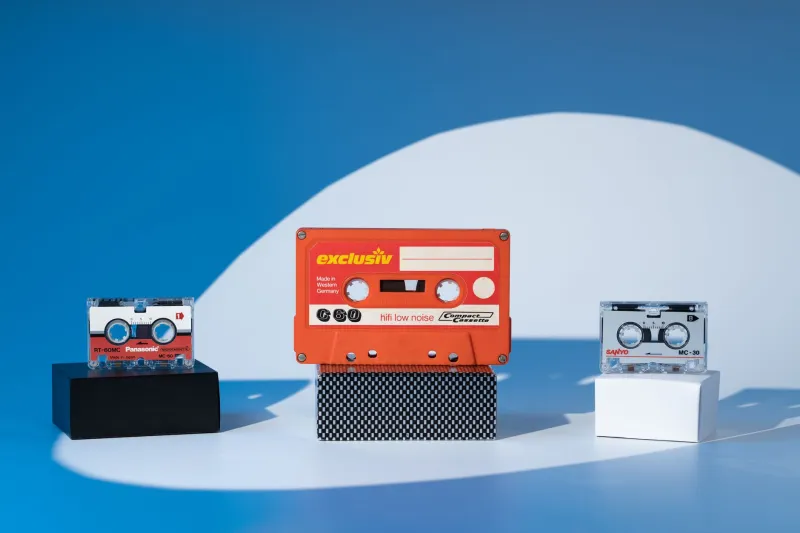
There's a cassette tape sitting on a shelf in a Portland apartment that contains forty-seven minutes of what sounds like a garbage disposal arguing with a shortwave radio. It was pressed in an edition of thirty copies. Twenty-eight of them sold. The artist made exactly enough money to cover the cost of the tapes themselves, and they couldn't be happier about it.
This is not a failure story.
Across the United States — in basement practice spaces in Chicago, converted warehouses in Detroit, cramped apartments in Bushwick, and sun-baked garages in Albuquerque — a loose, deliberately unorganized network of sound artists is making work that the streaming economy was never built to hold. Harsh noise walls that last ninety minutes with no discernible structure. Field recordings of dying infrastructure. Drone pieces that take twenty minutes to do anything at all. Music, if you want to call it that, designed from the ground up to be hostile to the skip button, the shuffle function, and the thirty-second preview.
They're not failing to find an audience. They're refusing to find yours.
The Playlist Is a Cage
To understand why this matters, you have to understand what algorithmic streaming actually does to sound. Spotify's internal data has suggested that tracks frontloading energy in the first fifteen seconds perform dramatically better on discovery playlists. Apple Music's editorial curation skews toward clean, hi-fi production with recognizable song structures. TikTok's audio ecosystem rewards hooks that land in under three seconds. Every major platform, in its own way, applies invisible pressure on artists to make work that behaves — that slots neatly into a listening context built around passive consumption and infinite scroll.
For most musicians trying to pay rent, that pressure is real and it's brutal. But for the underground sound community, it's also clarifying.
"The algorithm is just a very efficient machine for making everything sound like everything else," says one Chicago-based noise artist who releases work under a name that contains a character most operating systems can't render. "Once you understand that, you realize the most radical thing you can do is make something it literally cannot process."
Harsh noise — the genre built on feedback, distortion, and the aggressive rejection of melody — has existed since the Japanese underground scenes of the 1980s. But something has shifted in the last five years. What was once primarily an aesthetic stance has become, for a growing number of American practitioners, an explicitly political one. The ugliness isn't incidental. It's the argument.
Parallel Worlds, Physical Objects
Without streaming revenue, these artists have had to build their own infrastructure, and the results are genuinely fascinating. Bandcamp — despite its own corporate complications after being acquired and then sold off — remains a critical hub, but the real action happens further underground. Hand-dubbed cassette labels operating out of spare bedrooms. CDr runs burned one at a time and shipped in hand-decorated envelopes. USB drives packaged with zines. Pay-what-you-want download codes tucked into the pages of self-published books.
The economics are strange and sustainable in ways that defy conventional music industry logic. When your entire pressing is thirty copies and your overhead is the cost of blank tapes and postage, you don't need a million streams. You need thirty people who care enough to seek you out. And those people, it turns out, are everywhere.
Labels like American Tapes (out of Michigan), Hanson Records (Illinois), and dozens of smaller operations with no web presence beyond a PO box have quietly sustained entire ecosystems of experimental sound for decades. New operations keep forming. A collective in Philadelphia recently launched a subscription model where members receive a mystery package of experimental audio every two months — no track listings, no genre descriptions, just sound.
"We're not anti-commerce," one of the collective's organizers is careful to clarify. "We're anti-their commerce. The version of commerce that turns your attention into a product and then sells it back to you."
The Listening Party as Radical Act
Maybe the most interesting thing happening in this world isn't the objects themselves — it's the listening contexts being built around them. As streaming has increasingly turned music into background infrastructure, the underground noise community has responded by making listening into a foreground event.
Loft shows in cities across the country gather small crowds — sometimes eight people, sometimes forty — to sit in near-darkness and experience extended sound works in complete silence. No phones out. No bar noise. No setlist. The social contract is that you will pay attention, which turns out to feel almost transgressive in 2025.
Field recording nights have become their own subgenre of gathering, where artists present recordings made in specific, often overlooked places — the acoustics of an abandoned mall in Ohio, the ambient noise floor of a neighborhood that's being gentrified out of existence, the sound of a river that's been rerouted by agricultural runoff. These aren't just concerts. They're something closer to community testimony.
"Sound is evidence," says a Detroit-based artist who records industrial sites slated for demolition. "When a place gets torn down, the sound goes with it. I'm just trying to keep some of that alive."
Incompatibility as Politics
It would be easy to frame all of this as mere aesthetics — a bunch of art-school types making difficult work because difficult work is cool. But that reading misses what's actually at stake. Platform consolidation in the music industry is not an abstract problem. It's a mechanism by which a handful of corporations get to decide what counts as music, what counts as an audience, and what counts as success. Every artist who opts out of that system — even partially, even awkwardly — is doing something that matters beyond their own career.
The noise community's rejection of algorithmic compatibility is, at its core, a rejection of the idea that cultural value is determined by engagement metrics. It's a bet that intimacy beats scale. That a room of twenty people genuinely moved by something is worth more than a million passive half-listens. That art doesn't owe anyone a hook.
Is it a perfect political stance? No. The underground has its own gatekeeping, its own scene politics, its own ways of being exclusionary. It's mostly white. It's mostly male, though that's been shifting. It's not without its contradictions.
But there's something genuinely worth paying attention to in a community that has looked at the streaming economy, understood exactly what it offers and what it costs, and decided the trade isn't worth making.
Find It If You Can
If you want in, the entry points are deliberately low-friction but require actual effort. Dig through Bandcamp's experimental and noise tags late at night. Look for show listings on hand-stapled flyers at your local independent record store. Follow small labels on social media until you find the ones that feel like they're whispering something important.
The work will not come to you. That's the whole point. The algorithm rewards passivity. This world rewards curiosity.
Somewhere right now, a person is dubbing cassettes by hand and thinking about whether to press twenty copies or thirty. Somewhere else, eight people are sitting in a dark room listening to the sound of a place that no longer exists. None of it will show up in your Discover Weekly.
That's not a bug. That's the feature.


