Spores, Basements, and Breakthroughs: The Rogue Mycologists Rewriting Biotech's Rulebook
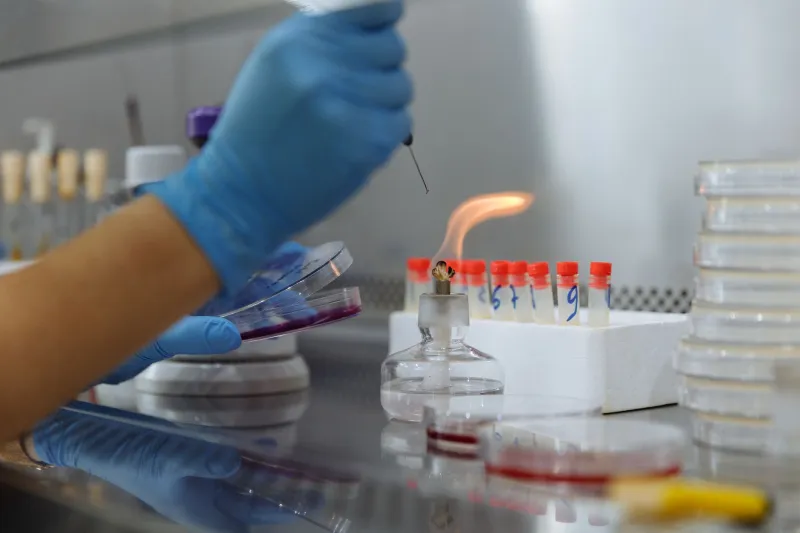
Somewhere in a suburb outside Portland, Oregon, there's a spare bedroom that smells faintly of earth and rain. The closet holds rows of mason jars stuffed with grain and white webbing. A grow tent hums in the corner. Post-it notes cover a whiteboard. This is not a university lab. It doesn't have a grant committee or an IRB approval board breathing down its neck. What it has is Marcus — a 34-year-old former line cook with a GED and an obsession with Hericium erinaceus, better known as lion's mane mushroom — and about three years of self-taught mycology under his belt.
"People act like science is this sacred thing that only happens in certain buildings," Marcus says, carefully swabbing a petri dish with the focus of someone who has done this a thousand times. "But fungi don't care where you went to school."
Marcus is part of a loose, decentralized movement of DIY biologists and amateur mycologists who are quietly — and sometimes not so quietly — conducting legitimate fungal research outside the walls of traditional academia. They're developing novel cultivation techniques, experimenting with medicinal strains, and sharing their findings openly on forums, Discord servers, and self-published GitHub repositories. And they're doing it all on shoestring budgets that would make most university department heads laugh — until they see the results.
The Gatekeeping Problem
Here's a thing that doesn't get talked about enough: science has a serious access problem. Peer-reviewed journals charge hundreds of dollars per article to read. Lab equipment costs tens of thousands. Meaningful research positions require years of credentialing that, in the United States, often means taking on crushing student debt. The result is a system where who gets to make discoveries is shaped less by curiosity and talent than by zip code, class background, and institutional affiliation.
Mycology, weirdly enough, has become one of the more accessible entry points into citizen science — partly because fungi are forgiving teachers. You don't need a centrifuge to grow a culture. You don't need liquid nitrogen to preserve a sample. A pressure cooker, a still air box made from a plastic tote, and a few hundred dollars in supplies can get you started. Communities like Shroomery, r/unclebens (RIP), and a dozen successor forums have democratized the baseline knowledge, building what amounts to a free, crowdsourced textbook on fungal cultivation.
But some practitioners are going further. Way further.
From Cultivation to Research
Tamika, a 29-year-old in Atlanta who works days as a pharmacy technician, has spent the last two years selectively isolating Ganoderma lucidum — reishi — trying to identify strains with elevated concentrations of specific triterpenoids, compounds associated with immune modulation. Her methodology isn't sloppy. She keeps meticulous logs, photographs every step, and has connected with a retired biochemist who reviews her protocols.
"I'm not claiming I've cured anything," she says, with the measured tone of someone who has learned to pre-empt the eye-rolls. "I'm doing exploratory work. The same kind of work that happens in labs, just without the overhead — or the institutional bias about what's worth studying."
That last part is key. Institutional research follows funding, and funding follows profit potential. Fungi with real medicinal promise — Trametes versicolor (turkey tail), Cordyceps militaris, lion's mane — have been used in traditional medicine for centuries across East Asia. But because they can't be easily patented in their natural form, pharmaceutical companies have little financial incentive to fund large-scale trials. The result is a research gap that citizen scientists are, increasingly, stepping into.
The Legal Gray Zone
Not everything about this world is tidy. Some of the fungi being studied and cultivated exist in complicated legal territory — particularly species that produce psychoactive compounds. Psilocybin mushrooms remain Schedule I controlled substances under federal law, though a growing number of cities and states (Denver, Oregon, Colorado) have moved toward decriminalization or regulated therapeutic frameworks. The citizen science community that orbits these species is careful, mostly, but the line between legal cultivation research and something prosecutable is thin and poorly defined.
"The law hasn't caught up to the science," says Jordan, a harm reduction advocate in Denver who works adjacent to the psilocybin research community. "And in that gap, you've got people doing genuinely valuable work who could still face serious consequences depending on where they live and who's paying attention."
For many in the movement, the legal ambiguity is inseparable from the political one. The criminalization of certain fungi — and the knowledge surrounding them — is itself a form of gatekeeping, one with roots in the same systems that have historically controlled who gets to define legitimate science.
Open Source Everything
What distinguishes this generation of DIY mycologists from backyard hobbyists of the past is their commitment to radical transparency. Findings get posted publicly. Protocols get shared before anyone's had a chance to monetize them. Failures — contaminated jars, botched agar plates, inconclusive results — get documented alongside successes.
This open-source ethos is a direct rebuke of how traditional biotech operates, where data gets locked behind patents and publication embargoes. Several community members have begun pushing their findings onto platforms like Zenodo and Open Science Framework, giving their work at least the structural legitimacy of a citable record.
"We're not trying to compete with universities," says Marcus. "We're trying to make it so universities can't ignore us."
Some are already paying attention. A handful of academic mycologists have quietly begun citing citizen science observations in their published work, crediting online communities for flagging strain behaviors or geographic distribution patterns that formal research had missed. It's a small acknowledgment, but a meaningful one.
The Bigger Picture
What's happening in these basements and spare bedrooms is bigger than mushrooms. It's a challenge to the foundational assumption that expertise requires institutional validation — that discovery is the exclusive province of the credentialed. The DIY biotech movement, of which mycology is one of the most accessible and fastest-growing corners, is asking a question that the scientific establishment would rather not sit with: What have we missed because we only listened to certain people?
The answer, if the folks growing cultures in their closets have anything to say about it, is: probably a lot.
Fungi have been on this planet for roughly a billion years. They've survived mass extinctions, adapted to every conceivable environment, and woven themselves into the foundational chemistry of ecosystems we're only beginning to understand. The idea that unlocking their potential requires a particular degree from a particular institution, in a particular tax bracket — that's the thing that doesn't quite hold up under scrutiny.
Marcus caps his petri dish and labels it with a Sharpie. Another data point in a project no one commissioned and no one is paying him for.
"People keep waiting for permission to do something meaningful," he says. "I just stopped waiting."