No Lab Coat Required: The Backyard Scientists Hacking Biology Before Anyone Says They Can
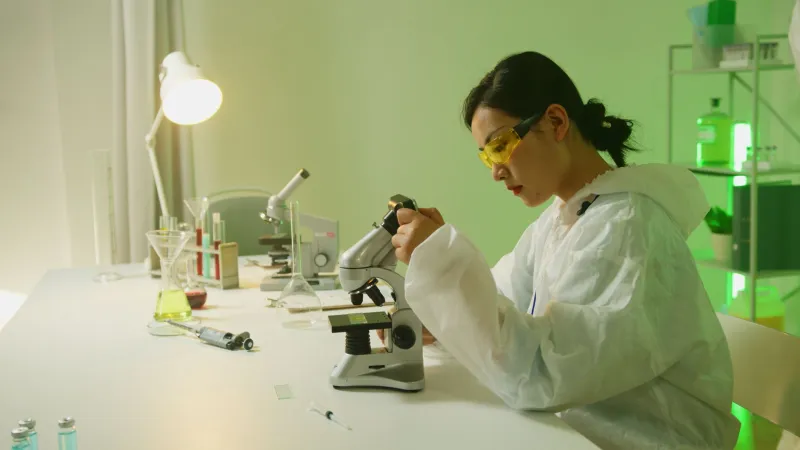
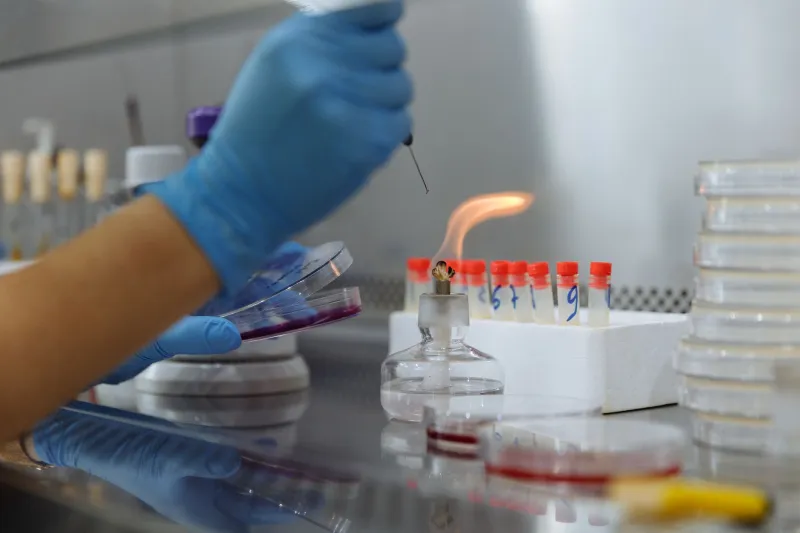
Somewhere in a suburb outside Austin, a 34-year-old former software engineer named Marcus is pipetting bacterial cultures at a folding table he bought secondhand from a church rummage sale. His centrifuge cost him $200 on eBay. His PCR machine — the same kind of device that detects viruses in clinical labs — he built himself from a kit. On the whiteboard behind him, scrawled in blue marker, is a question that's been driving his evenings and weekends for three years: Can we engineer a probiotic that actually survives stomach acid long enough to do something useful?
Marcus isn't affiliated with any university. He has no grant funding, no institutional review board, and no supervisor. What he does have is a community of a few hundred like-minded experimenters scattered across the country, a shared Slack workspace that runs hot at 2 a.m., and a philosophy that sounds almost radical in the context of modern science: if you want to know something badly enough, you should be allowed to try to find out.
Welcome to the world of DIY biohacking — and it's a lot more serious, and a lot more complicated, than it sounds.
The Lab That Peer Review Forgot
The biohacker movement isn't new, exactly. Community biology labs started popping up in major cities around 2010, with spaces like Genspace in Brooklyn and BioCurious in Silicon Valley offering shared equipment and a kind of open-source ethos borrowed from the early internet. What's changed in the last few years is the economics. Gene-editing tools have gotten dramatically cheaper. CRISPR kits — yes, actual CRISPR kits — are available online for under $200. Reagents that once required institutional purchasing accounts can now be ordered through standard e-commerce platforms. The barriers haven't disappeared, but they've dropped low enough that a determined amateur with a decent income and a high tolerance for failure can actually get somewhere.
And people are getting somewhere. Josie, a 28-year-old in Portland who works days as a graphic designer, has been experimenting with bioluminescent organisms for two years. Her stated goal is modest — she wants to understand the gene expression pathway well enough to create a stable glow-in-the-dark houseplant — but the methodology she's developed along the way is anything but casual. She keeps meticulous lab notebooks, photographs every stage, and has posted detailed protocols online that other hobbyists have replicated and refined. In another context, that's called contributing to a body of scientific literature. Here, it's just Tuesday night.
The Ethics Conversation Nobody Wants to Have (But Has to)
Here's where it gets genuinely thorny. The same democratization that lets Josie play with bioluminescence also theoretically lowers the barrier to experiments that nobody should be running in a spare bedroom. Federal oversight of genetic research is real — the CDC and USDA both regulate work involving certain pathogens and genetically modified organisms — but enforcement in the DIY space is murky at best. Most biohackers are emphatic about self-policing: they avoid dangerous organisms, share safety protocols obsessively, and maintain an informal community norm of transparency. But informal norms aren't regulations, and not everyone operating in this space is plugged into the community's ethical culture.
Dr. Priya Anand, a bioethicist at a research university who has been watching the movement for years, puts it plainly: "The vast majority of what these people are doing is genuinely benign, and some of it is legitimately interesting science. The concern isn't the community. The concern is the edges — the people who aren't connected, aren't sharing, aren't asking questions about safety because they don't know the community exists."
That tension is something the biohacker community wrestles with openly, which is itself kind of remarkable. In the Slack channels and Discord servers and Reddit threads where this world lives, debates about ethics aren't hushed. They're loud, frequent, and unresolved. Someone proposes an experiment and immediately gets three replies asking about containment protocols. Someone shares a new technique and gets pushback about dual-use potential — the idea that knowledge developed for good purposes can be repurposed for harmful ones. The community is doing, in real time and without institutional structure, the kind of ethical deliberation that usually happens in university committees and regulatory bodies.
Science as a Permission Structure
What drives people into their basements with pipettes and petri dishes? The answers vary, but a common thread is frustration with gatekeeping — not just the financial gatekeeping of expensive degrees and grant competition, but the intellectual gatekeeping of who gets to ask which questions.
"Academic science has priorities," Marcus says, not unkindly. "Funding priorities, publication priorities, career priorities. There are whole categories of questions that aren't interesting enough to get funded, or too weird, or too early. I'm not interested in waiting for the system to decide my question is worth asking."
That sentiment echoes something bigger happening across American culture right now — a deep skepticism of institutions and a hunger for direct participation that cuts across political lines. The biohackers aren't anti-science. If anything, they're aggressively pro-science in the most literal sense: they want to do it. What they're skeptical of is the institutional scaffolding that has, over decades, come to feel less like a support structure for discovery and more like a velvet rope.
There's also, for many of them, a genuinely progressive politics underneath the pipetting. Open-source biology, they argue, could mean medicines developed outside the patent system, diagnostics designed for low-income communities, agricultural solutions that don't require a multinational corporation's blessing. The dream isn't just personal curiosity — it's a different model for how scientific knowledge gets created and who it serves.
What Comes Next
The regulatory conversation is slowly, awkwardly catching up. Some biosafety experts have argued for a tiered licensing system that would give serious amateur researchers a legal pathway to work that's currently in a gray zone. Others worry that any formalization creates a two-tier system that defeats the point. The biohackers themselves are divided — some want legitimacy, some think legitimacy means co-optation.
What's clear is that the basement labs aren't going anywhere. If anything, they're multiplying. And the questions they're raising — about access, about ownership, about who gets to define scientific legitimacy — are going to get louder before they get quieter.
Marcus is still working on his probiotic. He hasn't cracked it yet. But he's also published two detailed experimental logs that other researchers, including at least one affiliated with a university, have cited in their own work. He doesn't have a lab coat. He has something that might be more durable: a question he refuses to stop asking, and a community that refuses to stop with him.