When Your WiFi Dies, God Speaks: The Rise of Glitch Theology
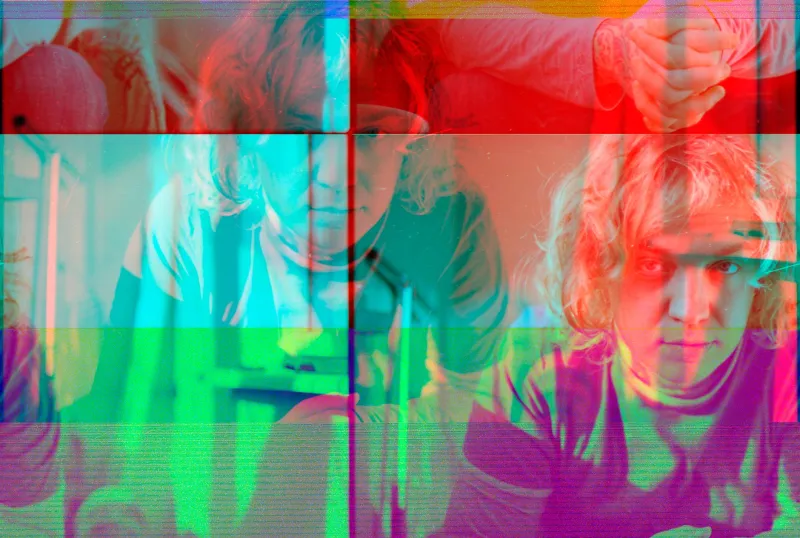
You're in the middle of a video call that matters — a job interview, a therapy session, a long-distance conversation with someone you love — and suddenly the screen freezes. Their face pixelates into a mosaic of colored squares. The audio warps into something inhuman. And then: silence.
Most of us curse the router and hit refresh. But a quietly growing community of seekers across the US is doing something else entirely. They're pausing. Breathing. Asking what the glitch might mean.
Welcome to glitch theology — a loose, decentralized spiritual movement that treats technological failure not as an inconvenience to be fixed, but as a signal worth reading.
Error 404: Meaning Not Found (Or Was It?)
The roots of this idea aren't as far-out as they might sound. Humans have always looked for meaning in disruption. Romans read omens in lightning. Indigenous traditions across North America have long understood unexpected natural events as messages from the spirit world. The I Ching is literally a system for finding wisdom in randomness. What glitch theology does is drag that ancient impulse into the fiber-optic present.
"We're already living inside technology the way previous generations lived inside nature," says Mara Voss, a 29-year-old from Portland who runs a Discord community called Signal Noise with nearly 4,000 members. "So it makes sense that the cracks in that technology would carry the same weight that a sudden storm or a strange bird used to carry. The medium changed. The need for meaning didn't."
Voss started Signal Noise in 2021 after a particularly brutal stretch of pandemic isolation. She'd been deep in research on chaos magic — a practice that essentially treats belief itself as a tool — and started wondering if the constant technical dysfunction of remote life could be reframed. "I was having three or four connection failures a day. Every Zoom call felt like it was falling apart. And I thought, what if I stopped fighting that? What if I listened instead?"
The Digital Shaman Has Entered the Chat
There's a spectrum of how seriously people inside this movement take their practice. On one end, you've got casual reframers — people who use a buffering screen as a cue to take a breath, treating it like an accidental mindfulness bell. On the other end, you've got practitioners who have developed full-blown interpretive systems.
Jordan Alleyne, a 34-year-old self-described "digital shaman" based in Atlanta, falls firmly in the latter camp. They offer one-on-one sessions — conducted entirely online, naturally — in which they help clients interpret the specific texture of their recent tech failures. A dropped call at a particular moment in a conversation. A file that won't open no matter what you try. A notification that arrives at an uncanny time.
"I'm not saying the internet is haunted," Alleyne is quick to clarify, laughing. "I'm saying that we project meaning onto everything, and the choice of what we project matters. If you treat every glitch as an obstacle, you train yourself to see life as something that keeps blocking you. If you treat it as information, you train yourself to be curious instead of frustrated. That's not mysticism — that's just psychology with better aesthetics."
Alleyne's sessions draw on everything from Jungian synchronicity to Buddhist impermanence teachings to the actual technical mechanics of how data packets travel across networks. "There's something genuinely profound about how the internet works," they say. "Information breaks apart, travels through chaos, and reassembles on the other end. That's not a bad metaphor for consciousness. Or grief. Or love, honestly."
Rituals for the Buffering Generation
What makes glitch theology feel distinct from, say, standard tech-bro mindfulness is the ritualistic dimension. Communities like Signal Noise have developed actual practices — not just frameworks for thinking, but things people do.
One of the most popular is the "freeze frame" ritual. When a video call glitches and someone's face gets caught in a distorted, pixelated freeze, members screenshot the image and sit with it. They journal about what they see in the abstracted shapes. Some treat it like a Rorschach test. Others describe it as a kind of accidental portrait — the technology revealing something about the person that normal image resolution conceals.
Another practice involves deliberate exposure to dial-up sounds, old modem screeches, and the particular audio texture of a corrupted video file. In the Signal Noise community, there are curated playlists of these sounds used for meditation. "People think it's weird until they try it," Voss says. "There's something about that sound that hits different. It's the sound of connection struggling to happen. Which is basically the sound of being alive."
Offline gatherings — called "lag parties" — have started popping up in cities like Brooklyn, Austin, and Chicago. Attendees bring laptops and phones, intentionally throttle their connections, and spend an evening in intentional slowness. Some bring journals. Some bring instruments. The vibe is somewhere between a Quaker meeting and a noise music show.
Not Everyone Is Buying It
It's worth being honest: glitch theology has its skeptics, even within progressive spiritual communities. Some critics argue it's a form of apophenia — the very human tendency to find patterns where none exist — dressed up in countercultural aesthetics. Others worry that it aestheticizes the digital divide; for plenty of Americans, bad internet isn't a spiritual experience, it's a structural injustice.
Alleyne acknowledges this tension directly. "I don't want this to become a thing where wealthy people with good laptops romanticize the internet problems that poor people actually suffer from. That would be gross. The practice only makes sense if it's grounded in awareness of that reality, not escapism from it."
Voss echoes this, pointing out that several Signal Noise members are actively involved in digital equity advocacy alongside their spiritual practice. "The two things aren't in conflict," she says. "You can fight for universal broadband access and also find meaning in the disruptions you experience. Actually, I think the people who've made peace with imperfection tend to be more motivated to fix systemic problems, not less. Acceptance isn't the same as resignation."
The Theology Nobody Asked For, But Maybe Needed
What strikes you, spending time with these communities, is how earnest they are. There's no ironic detachment, no winking at the camera. These are people who are genuinely trying to build a spiritual life in a world that didn't come with instructions — a world made of code and copper wire and invisible signals bouncing between satellites.
In a cultural moment defined by algorithmic acceleration and attention scarcity, there's something quietly radical about treating interruption as sacred. About choosing, deliberately, to sit in the static instead of immediately clicking away.
The glitch, after all, is the moment the illusion breaks. The moment the smooth surface of the digital world cracks open and you glimpse the chaos underneath. Theologians of every tradition have a word for that kind of crack — the place where the ordinary world splits and something else shows through.
They call it a threshold.
Maybe the buffering wheel is just that.