Cut, Paste, Distribute: Why the Kids Are Choosing Photocopiers Over Platforms
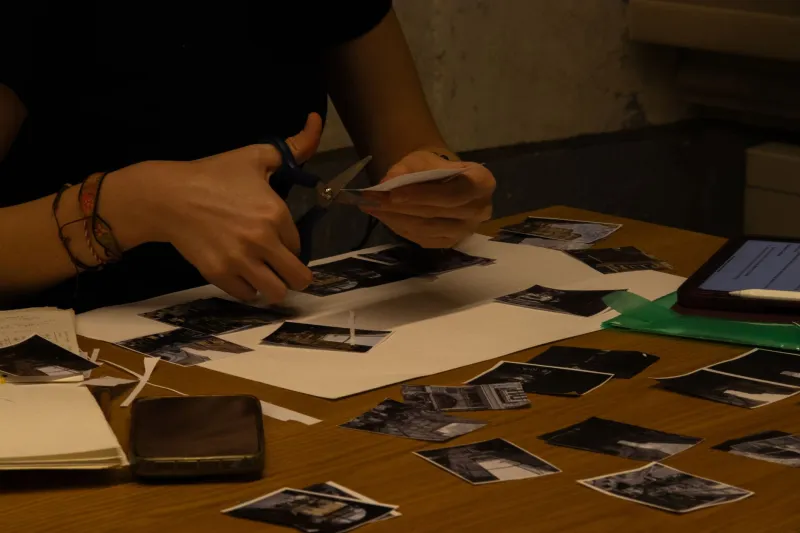
Somewhere in a rented studio space in East Nashville, a 23-year-old named Dara is running the same sheet of paper through a photocopier for the fourth time tonight. The toner smells like something between ambition and burnt toast. Her hands are ink-stained. She hasn't opened Instagram in three days. She is, by her own description, completely at peace.
Dara makes zines — hand-assembled, staple-bound, aggressively photocopied little publications that she distributes at record stores, laundromats, and community fridges. Her current issue covers tenant organizing, the myth of the meritocracy, and a two-page comic about a landlord who turns into a cockroach. Print run: 200 copies. Intended audience: anyone who picks one up.
"I don't want to know my metrics," she says. "I don't want to optimize anything. I want to make something real and put it in a stranger's hands."
She is not alone.
The Feed Is Exhausting. The Photocopier Is Not.
DIY zine culture — born in punk basements, feminist bookstores, and science fiction fan clubs — has never fully gone away. But something is shifting. Across the US, a new wave of young creators and activists are returning to physical print with a deliberateness that feels less like nostalgia and more like strategy.
The reasons are tangled up in each other. There's the algorithmic fatigue: the sense that every creative act online is immediately processed, ranked, shadowbanned, or swallowed by a feed designed to keep you scrolling rather than thinking. There's the surveillance anxiety: the knowledge that digital platforms are not neutral vessels but data-harvesting machines with terms of service nobody reads. And there's something harder to name — a hunger for permanence, for the thing you made to exist in a way that can't be deleted with a policy update.
Zines offer all of that in one stapled package.
"A zine can't be deplatformed," says Marcus, a 27-year-old in Chicago who publishes a quarterly focused on mutual aid networks and food justice. "Once it's printed, it exists. You can't undo it. That feels radical right now."
What a Zine Actually Is (And Isn't)
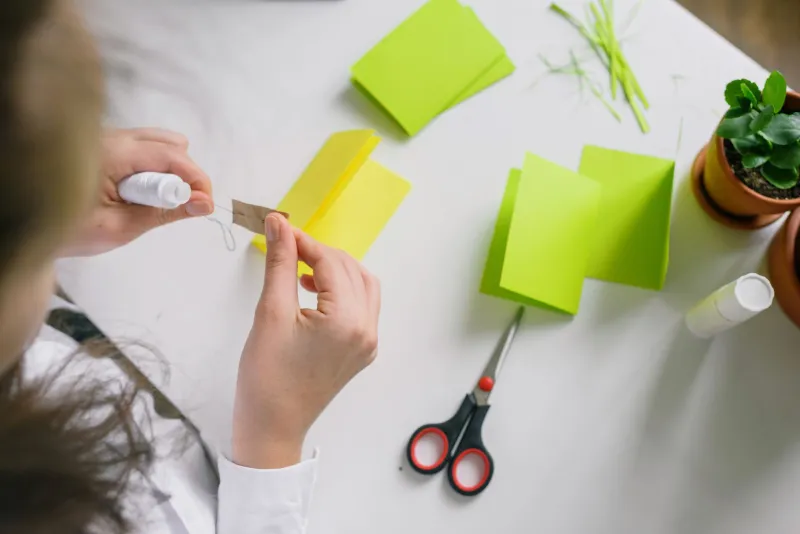
For the uninitiated: a zine (short for magazine or fanzine, depending on who you ask) is a self-published, small-circulation work. Format varies wildly — half-sheet folded booklets, full tabloid spreads, accordion folds that open into posters, single-sheet risograph prints. Content varies even more. Political manifestos. Poetry collections. Niche community newsletters. Grief journals made public. Queer theory written in sharpie.
What unites them is the intentional rejection of gatekeeping. No editors. No advertisers. No algorithm deciding who sees what. The creator controls the message, the design, the distribution, and the price — which is often nothing at all.
This is not a new idea. Zines powered the riot grrrl movement of the '90s, circulated through punk scenes in the '70s and '80s, and served as the connective tissue of countercultural communities long before anyone had a WiFi password. But the current moment has given the form new urgency.
Tactile Resistance in a Swipe-Up World
There's a political dimension to choosing print that today's zinesters are pretty explicit about. When you make a zine, you're opting out — of engagement metrics, of the attention economy, of the performance of activism that social media often demands.
"Posting about an issue and making a zine about an issue feel completely different in my body," says Yolanda, a 25-year-old organizer in Philadelphia who publishes a zine focused on housing policy and neighborhood history. "One feels like shouting into a void. The other feels like building something."
There's also the matter of who gets reached. Digital activism, for all its speed and scale, still requires a device, an account, and an algorithm willing to surface your content. A zine left in a laundromat in a working-class neighborhood reaches people who might never encounter the same message online — not because they're offline, but because the platform would never show it to them.
This is distribution as a political act. Placement matters. Marcus hand-delivers his zines to community centers, barbershops, and church fellowship halls. Dara tucks hers into Little Free Libraries. Others mail them, trade them, leave stacks at shows.
"You're building a physical network," Marcus says. "Every zine is a node."
The Aesthetics of Limitation
It would be incomplete to talk about this movement without talking about what it looks like — because zine aesthetics are doing real cultural work right now.
The cut-and-paste collage style, the high-contrast black-and-white xerox look, the handwritten annotations and deliberately imperfect layouts — these aren't just budget constraints. They're a visual language that communicates something about authenticity, urgency, and refusal. In a media landscape saturated with hyper-polished content, the rough edges of a zine read as honest.
Risograph printing — a process that produces slightly misaligned, beautifully textured color prints — has become something of a status aesthetic in the zine world, with small print shops in cities like Portland, Brooklyn, and Austin doing brisk business running zine jobs. But even the most analog, lo-fi photocopy-and-staple approach carries its own aesthetic charge. The medium is inseparable from the message.
"When something looks like it cost money and had a team behind it, I immediately wonder who paid for it and why," says Yolanda. "A zine that looks like someone made it at midnight on a borrowed copier — I trust that."
Community, Slowly Built
Zine fests — events where makers table and trade and sell their work — have been proliferating across the country. Chicago Zine Fest, the Portland Zine Symposium, the LA Zine Fest, and dozens of smaller regional events draw thousands of attendees who come not just to buy but to connect. These gatherings function as something between a marketplace, a political organizing space, and a community ritual.
And the communities that form around zine culture tend to be durable in ways that online communities often aren't. When your connection to a group is mediated by a physical object — by something you hold and read and maybe scrawl a note in the margin of — the relationship has different texture than a follow or a like.
"I've made real friends through zines," Dara says. "People who found my work at a show or a record store and reached out through the email I print on the back page. Not a DM. An actual email. It changes the quality of the conversation."
The Quiet Radicalism of Making Something Permanent
At the end of the night, Dara has her 200 copies. She'll spend the weekend distributing them. Some will be read immediately, dog-eared, passed to a roommate. Some will sit in a pile for months before someone picks them up. A few will probably end up in someone's personal archive, tucked into a box with other artifacts of this particular moment in American life.
That last part matters more than it might seem. Digital content disappears constantly — platforms fold, accounts get banned, links rot, servers go dark. But a physical zine, once it exists in someone's hands, has a kind of permanence that no cloud storage can replicate.
In a world where so much of what we make and share feels ephemeral by design, there is something quietly radical about printing something, stapling it, and handing it to a stranger.
Something that says: this happened. We were here. We thought this mattered enough to make it real.