Stitch by Stitch, Page by Page: The Gen Z Bookbinders Refusing to Let Dangerous Ideas Die

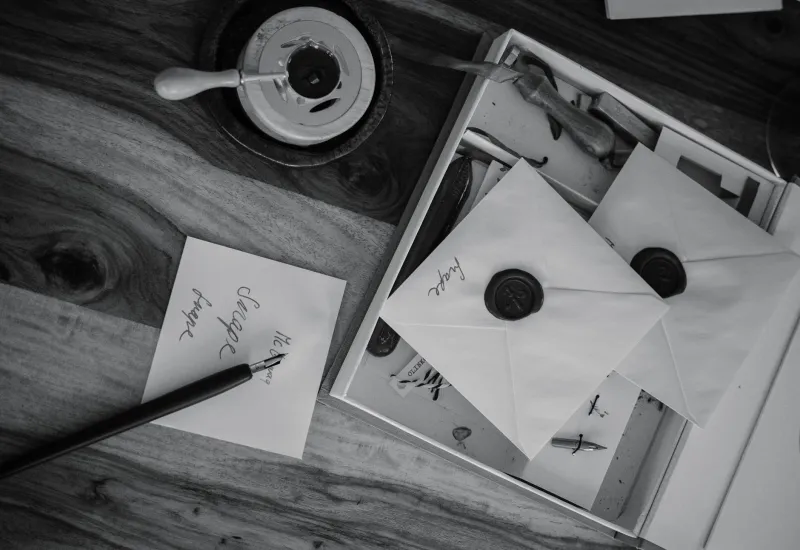
There's a particular kind of quiet that comes with making something by hand. Not the passive quiet of scrolling, or the hollow quiet of a muted notification. It's the quiet of focus — thread pulled tight through folded signatures, a bone folder creasing paper along a careful line, glue drying on a cover that didn't exist an hour ago.
In bedrooms from Portland to Pittsburgh, teenagers are rediscovering that quiet. And they're using it to do something that would've seemed almost quaint a decade ago: they're making books. Real ones. Sewn and glued and pressed under stacks of textbooks overnight. Books that contain stories and ideas that major publishers passed on, banned school boards flagged, or corporate distributors quietly buried.
This isn't your grandparent's bookbinding class. This is something with teeth.
Why Now, Why This
The timing isn't accidental. In the last few years, book banning in the US has reached levels not seen in decades. According to PEN America, nearly 4,000 book bans were recorded in the 2022–2023 school year alone — a staggering number that disproportionately targets LGBTQ+ stories, books by authors of color, and titles exploring trauma, identity, and systemic injustice. At the same time, the publishing industry has consolidated dramatically, with a handful of massive conglomerates controlling the majority of what gets printed, distributed, and promoted.
For a generation that grew up watching platforms deplatform, algorithms bury, and corporations sanitize, the response has been visceral and surprisingly analog: if you won't print it, we'll print it ourselves.
"I started because I was furious," says Dani, 17, from outside Columbus, Ohio. She learned basic Coptic binding from a YouTube tutorial after her school district removed Gender Queer by Maia Kobabe from the library. "I made five copies and gave them to friends. Then more people wanted them. Now I make maybe two or three books a month."
Dani isn't alone. Online communities dedicated to youth bookbinding have exploded on Discord and Tumblr — platforms where the culture skews younger and the moderation is slightly less corporate. Groups like Bound & Unbothered and The Stitch Collective have become informal networks where teenagers share tutorials, source materials, and most importantly, texts worth binding.
The Craft as the Message
What makes this movement distinct from, say, photocopying a zine (also cool, also alive and well) is the intentionality embedded in the physical object. Bookbinding is slow. It demands presence. You can't half-pay-attention while Coptic stitching a 200-page manuscript — the thread will tangle, the signatures will slip, and the whole thing will fall apart.
That slowness, these young binders say, is part of the point.
"Every book I make, I've read," explains Marcus, 19, a first-year college student in Atlanta who started binding during the pandemic. "I've held every page. I know where the paper creases weird, where I had to re-stitch a section. It's not just a thing I own — it's something I made with my hands while thinking about the words inside it. That changes how you relate to a text."
Marcus specializes in binding works by Black authors that he feels get underpublished or mishandled by mainstream houses — he's made his own editions of essays by Audre Lorde, lesser-known poetry collections, and self-published fiction he's found through small literary journals. He gives most of them away.
This ethos of gifting runs deep through the community. These aren't side hustles. They're acts of care.
"I think of it as mutual aid with pages," says Sofia, 18, from the Bronx. She learned bookbinding from her grandmother, who used similar techniques to preserve family documents. Sofia now makes copies of immigration rights guides, mental health resources translated into Spanish, and queer YA novels for friends whose families monitor their digital activity. "Some of my friends can't look this stuff up safely online. A physical book doesn't leave a search history."
That last line lands differently when you sit with it.
Reclaiming Authorship, One Signature at a Time
There's a longer intellectual tradition here that these teenagers are tapping into — whether they know it or not. Medieval monks copied manuscripts by hand. Samizdat networks in Soviet-era Eastern Europe passed typewritten books hand to hand. The abolitionist press in the antebellum US printed pamphlets in secret. Humans have always found ways to move dangerous ideas through dangerous times, and the physical book has always been a vessel of resistance.
But there's something specifically now about this iteration. These kids aren't just preserving — they're curating. They choose the texts. They design the covers. They decide the format, the binding style, the materials. In a media landscape where personalization usually means "an algorithm noticed you clicked on something twice," this is personalization with intention and politics behind it.
"I think about who's going to hold this," says Priya, 16, from the Chicago suburbs, who started binding after attending a library advocacy event with her mom. "I pick the cover cloth based on the person. I think about whether they need something sturdy that'll last, or something beautiful they'll want to display. It's like — I'm not just distributing a book. I'm sending someone a message that says, this story matters, and so do you."
Priya recently completed a hand-bound edition of an out-of-print collection of queer South Asian poetry she tracked down through an independent press in New York. She made three copies. All three are already promised to friends.
The Tools Are Humble, the Stakes Are Not
The barrier to entry is refreshingly low. A bone folder, a bookbinding needle, some waxed linen thread, PVA glue, and a cutting mat will run you under $40 total — less if you improvise. Many young binders use paper from thrift store books for endpapers, salvage fabric for covers, and print text at library copy centers or on home printers.
The communities that have formed around the practice are deliberately decentralized — no official membership, no fees, no hierarchy. Tutorials get shared freely. Experienced binders mentor beginners over Discord calls. There's an ethic of accessibility that mirrors the content being bound: this knowledge belongs to everyone.
"Corporate publishing is a vending machine," Marcus says, not unkindly. "You put in money, you get a product. What we're doing is more like a garden. It takes longer. It's messier. But it grows in all directions, and you can share the seeds."
What They're Building
None of the young binders interviewed for this piece think they're going to dismantle the publishing industry. That's not really the goal. The goal is something smaller and, in some ways, more radical: to ensure that the right book reaches the right person, made with care, outside the systems that would prefer it didn't exist at all.
In a moment when so much of our cultural life runs through platforms designed to extract attention and data, the handmade book is almost aggressively countercultural. It doesn't track you. It doesn't suggest related content. It doesn't disappear when a company goes bankrupt or a server goes dark.
It just sits there, patient and physical, waiting to be opened.
And somewhere tonight, a teenager is bent over a workbench, needle in hand, stitching something important into the world — one page at a time.