Ink, Dust, and Defiance: The Young Archivists Hiding Knowledge Where Google Can't Find It
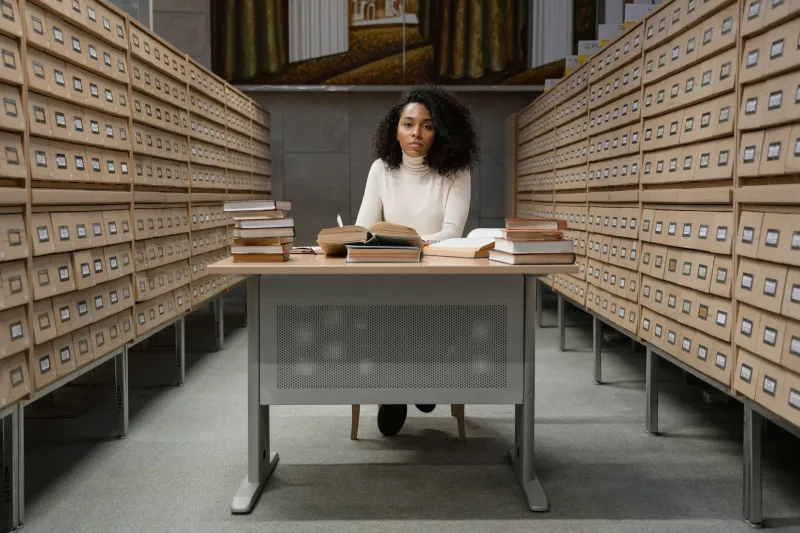
Somewhere in a suburb of Albuquerque, a nineteen-year-old named Petra has converted her parents' unfinished basement into what she calls a "memory room." Floor-to-ceiling shelves hold photocopied pamphlets, hand-annotated books, printed zines, and index card catalogs written in her own looping handwriting. There's no WiFi down there. That's kind of the point.
"If the power goes out, if the platform shuts down, if the company decides your search results should look different next quarter — none of that touches what's in this room," she says. "This is mine. This is ours."
Petra isn't alone. Quietly, without a trending hashtag to announce it, young people across the country are building underground archives — personal and communal repositories of physical knowledge deliberately constructed outside the reach of corporate databases, recommendation engines, and the slow, creeping homogenization of the internet.
Why Paper Feels Like a Political Act
To understand why a generation raised on smartphones is suddenly reaching for index cards, you have to understand the specific anxiety of growing up inside the algorithm. For people in their teens and twenties right now, the internet has never been a neutral space. It's always been curated — by engagement metrics, advertiser preferences, content moderation policies written by lawyers, and recommendation systems that quietly decide what you should think about next.
Books get delisted. Websites disappear. Search results shift. Entire communities of knowledge — particularly around queer history, Indigenous practices, radical political thought, or anything too weird for mainstream platforms — vanish without warning or appeal.
"I watched a whole archive of trans oral histories just go offline one day," says Marcus, a twenty-two-year-old in Detroit who now runs what he calls a "neighborhood shelf" out of his apartment. "No warning. The organization lost funding, the site went dark, and years of stories were just gone. That scared me more than anything."
For Marcus, the response was physical. He started printing things. Then organizing them. Then inviting neighbors to contribute. Now his living room hosts a rotating collection of printed resources on housing rights, local history, harm reduction, and queer culture — all cataloged by hand, all available to anyone who knocks.
The Art of the Handwritten Catalog
There's something almost meditative about the cataloging systems these young archivists are developing. Without the luxury of a searchable database, they've had to think carefully about how knowledge connects — which ideas live near each other, which threads deserve their own drawer, how a stranger might navigate a collection they've never seen before.
Some use modified versions of the Dewey Decimal System. Others invent their own taxonomies entirely, built around the specific needs of their communities. One collective in Portland, Oregon — a loose group of about fifteen people who call themselves the Understack — organizes their shared archive not by subject but by "urgency," sorting materials based on how likely the information is to disappear from mainstream sources.
"Stuff about abortion access in states where it's restricted goes in the front," explains one Understack member who asked to go by the name Crow. "Not because it's more important than everything else, but because it's the most at risk. We're trying to think like librarians who know the building might burn down."
That metaphor — the building might burn down — comes up a lot in these conversations. It's not paranoia exactly. It's a kind of practiced, clear-eyed attention to how fragile digital infrastructure actually is, dressed up in the confidence of someone who has already made a backup.
Community as the Real Archive
What makes these projects more than just personal hoarding habits is the social infrastructure growing up around them. The physical archive is often just the visible tip of something much larger: a community of people who share resources, teach each other preservation techniques, and pass materials along informal networks.
In Chicago, a group of high schoolers has been quietly building what they call a "lending library of last resort" — a collection of materials related to local activist history, mutual aid, and political education that circulates through the group via a paper sign-out sheet. No app. No late fees. No data collected.
"We do it at school, mostly," says one participant, a seventeen-year-old who goes by Yael. "Someone brings something in, someone else takes it home, they bring it back. It's just how books used to work. It feels kind of revolutionary that it feels revolutionary."
That last sentence lands hard. The fact that lending a physical book feels like an act of defiance says something real about how thoroughly digital surveillance has colonized everyday life. These kids didn't set out to be radicals. They set out to read something without being tracked.
Preservation as a Form of Love
Not everything in these archives is political in the obvious sense. Plenty of it is personal — family recipes, local folklore, neighborhood oral histories, handmade guides to skills that YouTube tutorials keep algorithmically burying under sponsored content. There's a tenderness to a lot of it that gets lost when the conversation focuses only on resistance.
Petra's basement, for instance, holds a whole section she calls "things my grandmother knew" — printed transcriptions of conversations she had with her abuela about herbal remedies, cooking techniques, and stories from their family's history in New Mexico. None of it is secret. Most of it exists, in fragments, somewhere online. But not all in one place, not in her grandmother's words, not preserved with the specific love of someone who understands what it means to almost lose something.
"Preservation isn't just about politics," she says. "It's about caring enough about something to make it last. The archive is an act of love as much as anything else."
What Comes Next
These underground libraries aren't trying to replace the internet. Most of the people building them are online constantly — they're not luddites, they're pragmatists. They understand that digital tools are powerful and that physical archives have their own vulnerabilities. Basements flood. Boxes get lost in moves. Paper deteriorates.
But the point was never permanence in the absolute sense. The point is redundancy. Plurality. The stubborn insistence that not everything worth knowing should live on a server owned by a company that can change its terms of service on a Tuesday afternoon.
In a culture where knowledge is increasingly mediated, monetized, and optimized for engagement, the act of writing something on an index card and putting it in a box feels almost shockingly direct. No middleman. No recommendation engine. Just information, and the person who needs it, and the community that decided it was worth keeping.
Somewhere in Albuquerque, the lights in the basement are still on. Petra is adding to the catalog. The handwriting is careful. The shelves are filling up.
And none of it is searchable. That's exactly the point.